The Fat You Can't Pinch: Why Visceral Fat Is the Metric Your Clients Are Missing

Charles Jonas
How 3D body scanning turns an invisible risk factor into a number people can actually act on.
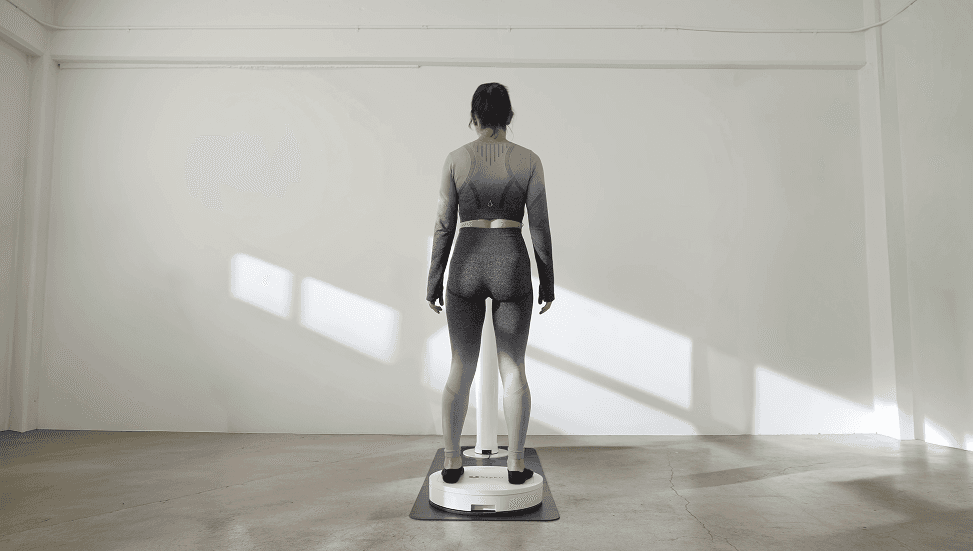
A 35-second scan captures hundreds of measurements — including an estimate of the fat you can't see.
Your client steps on the scale. Same number as last month. They're frustrated, you're frustrated, and the conversation stalls.
But the scale was never measuring the thing that matters most. Two people can weigh exactly the same and carry radically different health risks — because weight says nothing about where the fat sits. And when it comes to fat, location is close to everything.
Not all fat is created equal
Subcutaneous fat is the fat under your skin — the fat you can pinch. It's largely inert. Visceral adipose tissue (VAT) is different. It packs into the abdominal cavity, wrapping the liver, pancreas and intestines, and it behaves less like storage and more like an endocrine organ that has gone rogue.
Visceral fat drains directly into the portal vein, flooding the liver with free fatty acids. It secretes inflammatory cytokines and is strongly associated with markers of systemic inflammation and oxidative stress — an association demonstrated across more than a thousand Framingham Heart Study participants, where visceral fat showed stronger links to these markers than subcutaneous abdominal fat did.
The downstream consequences are well documented:
Cardiometabolic disease. In the Framingham Heart Study, visceral fat volume was associated with an adverse metabolic risk profile above and beyond BMI and waist circumference — and follow-up analyses found that for every additional 500 cm³ of baseline visceral fat, glucose ran higher and HDL cholesterol ran lower six years later.
Type 2 diabetes. Visceral adiposity drives hepatic and peripheral insulin resistance, and prospective cohorts have identified intra-abdominal fat as a predictor of incident metabolic syndrome.
Fatty liver disease. Visceral fat has a more detrimental impact on metabolic dysfunction-associated steatotic liver disease than subcutaneous fat.
Cardiovascular events and mortality. Visceral obesity is now treated as an emerging, independent risk factor for atherosclerotic cardiovascular disease, not just a marker of overall size.
Cognitive decline. Higher visceral fat area has been linked to structural brain changes and poorer cognitive function in older adults.
This is the fat that makes people sick. And it's the fat that a bathroom scale — and often a mirror — completely misses.
The BMI blind spot
Here's the finding that should reframe how the industry talks about weight.
A Mayo Clinic analysis of more than 15,000 adults, published in Annals of Internal Medicine, followed participants for an average of 14 years. People with a normal BMI but central obesity had the worst long-term survival of any group — worse than participants classified as obese by BMI. A man with a BMI of 22 and central obesity carried roughly 1.87 times the total mortality risk of a man with the same BMI without it.
Read that again. Normal weight. Elevated risk. Invisible on every metric most clinics collect.
The Australian picture makes this urgent. Based on measured data from the ABS 2022–24 National Health Measures Survey, roughly 67% of Australian adults aged 18 and over are living with overweight or obesity, and an estimated 48% have abdominal obesity — a waist measurement indicating substantially increased risk of metabolic complications. Notably, more women (54%) than men (42%) fall into that abdominal category.
Half the adult population is carrying a risk factor that standard intake forms don't capture.
Where Styku fits
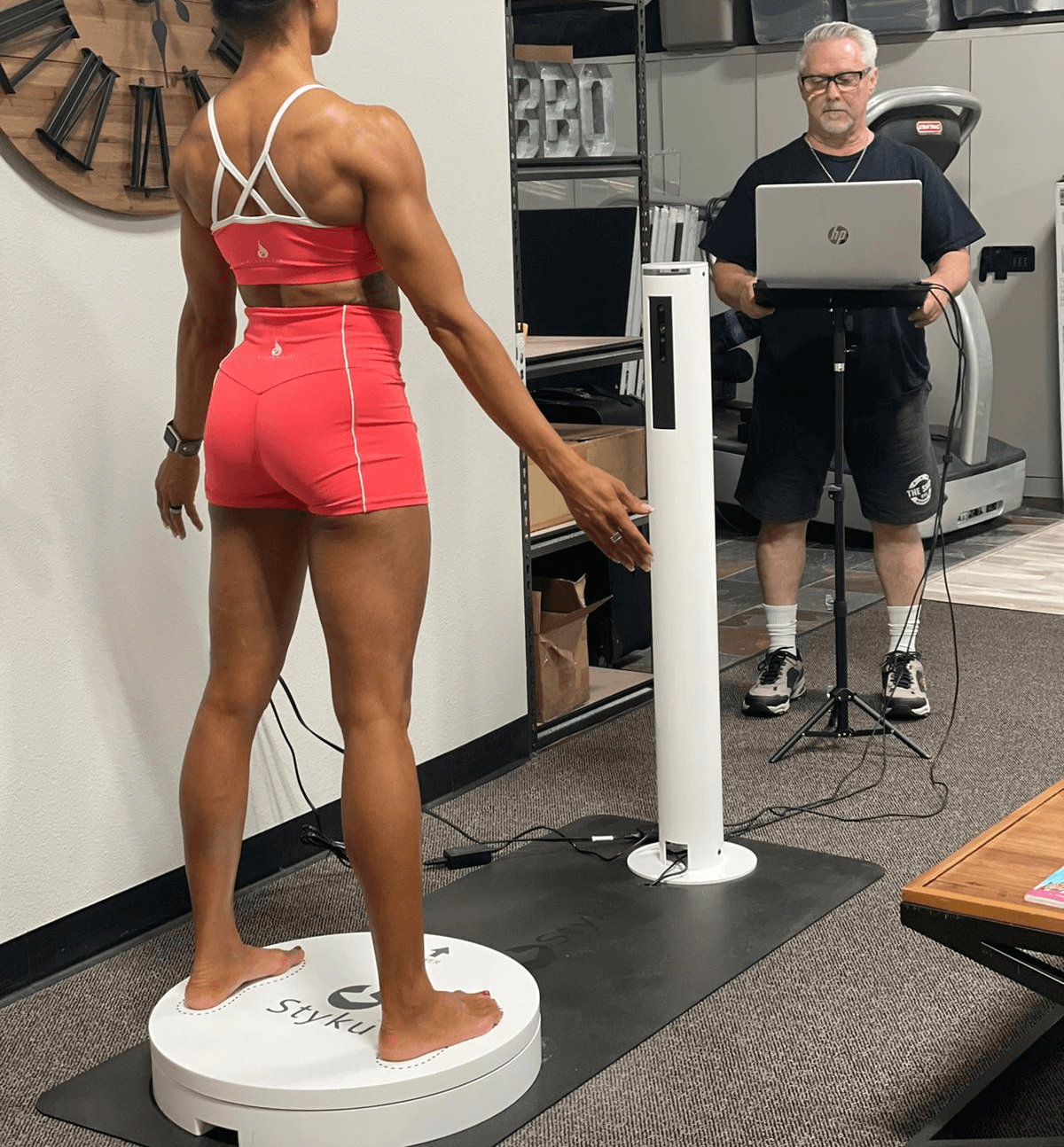
Contactless and autonomous: no handles to touch, no calipers, setup in two minutes.
Styku's 3D body scanner uses infrared depth sensing to capture a client's full body geometry while they rotate on a turntable. The scan itself takes around 35 seconds; processing takes under a minute. No radiation, no calipers, no tape measure, no technician subjectivity, and nothing to prepare for — no fasting, no dietary changes.
From that 3D mesh, the platform extracts hundreds of measurements and derives a body composition profile that includes:
Visceral fat — the metric this article is about
Subcutaneous fat in the android region (abdomen and thoracic)
Android mass (upper-body/central fat — the apple pattern) and gynoid mass (hip and thigh fat — the pear pattern)
Fat mass, lean mass and bone mass
Waist shape — a top-down cross-section showing where midsection fat is accumulating
Waist circumference and waist-to-hip ratio, benchmarked against risk thresholds
A health risk report expressing elevated risk as a multiplier — a 1.4× result for cardiovascular disease means a 40% increased risk relative to baseline
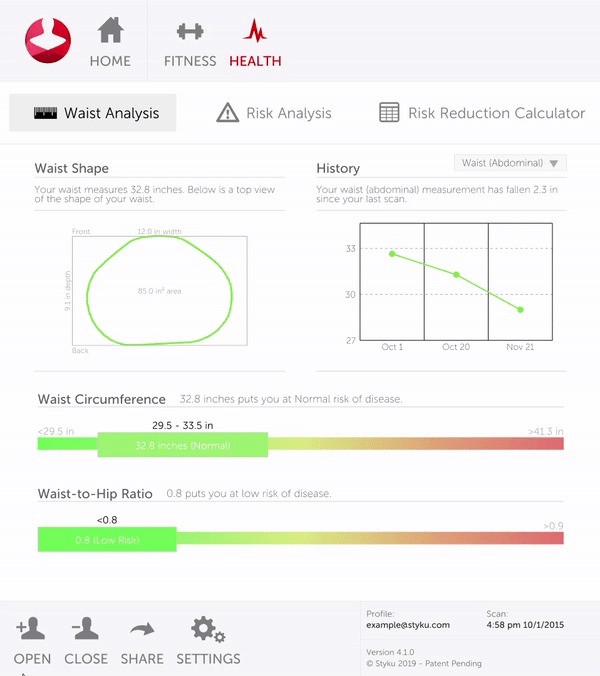
Screening for obesity-related disease risk, based on waist circumference and waist-to-height ratio thresholds from the WHO.
That last feature is the one that changes conversations. "Your visceral fat is elevated" is abstract. "Your current waist measurement is associated with 1.4× the cardiovascular risk, and here's what a 6 cm reduction does to that number" is a decision.
A note on what the number is — and isn't
Credibility matters more than hype here, so let's be precise.
CT and MRI remain the gold standard for quantifying visceral adipose tissue, with DXA the clinical reference for body composition. Styku's visceral fat output is a model-based estimate derived from body shape and surface geometry, not a direct internal measurement.
The underlying method has real research behind it. The Styku S100 was the scanner used in Shape Up! Adults, an NIH-funded study run across Pennington Biomedical Research Center, the University of Hawaii Cancer Center and UCSF, where 3D optical estimates were validated against duplicate DXA scans. In one four-component model comparison, 3D optical scanners produced fat-free mass estimates within about 1.2 kg of DXA on average, with test-retest coefficients of variation of roughly 2.3–4.3% for body fat percentage. Subsequent work has shown that body shape descriptors from 3D optical meshes improve prediction of metabolic syndrome beyond BMI and demographics alone.
Peer-reviewed work on the Styku scanner specifically has also reported near-perfect test-retest reliability for circumferences, surface areas and volumes, with intraclass correlation coefficients approaching 0.99 and negligible systematic error.
Where 3D optical scanning genuinely excels is precision and repeatability — which makes it exceptionally well suited to what clinics actually need: tracking direction and rate of change over weeks and months, at a cost and convenience level that allows for frequent rescanning. Position it as a screening and progress-tracking tool that flags risk and demonstrates change, not as a diagnostic substitute for imaging. Clients who screen high should be encouraged to discuss the result with their GP.
From a number to a plan
Fat-loss target, training frequency and calorie deficit resolve into a projected goal date — and detailed graphs show every metric changing over time.
Identification without a plan is just anxiety. This is where the platform earns its place in a weight-loss practice.
The scan report includes a fat loss calculator where the client sets a target fat loss in kilograms and a realistic training frequency (0–7 sessions per week). From there the system estimates:
Basal metabolic rate, using the Harris-Benedict equation
Total daily energy expenditure, of which BMR typically accounts for 60–75%
The daily calorie deficit required to hit the target
Recommended daily intake, adjustable if the client wants a gentler or more aggressive approach
A projected goal date that shifts in real time as they move the sliders
There's also an inch-loss (or cm-loss) goal targeting waist circumference specifically — and this is the feature most directly tied to visceral fat, because the evidence connecting waist change to visceral change is strong.
What the research says clients can expect
This is the evidence base for setting honest expectations:
Waist change tracks visceral change closely. A reduction of roughly 1 cm in waist circumference corresponds to approximately a 5 cm² (about 4%) reduction in visceral fat area at the L3 level.
Every kilogram counts more than people think. Each kilogram of diet-induced weight loss corresponds to roughly a 3–4 cm² absolute reduction in visceral fat, or about 2–3% in relative terms — meaning a 12 kg loss can correspond to a 30–35% reduction in VAT.
Visceral fat responds early. Meta-analytic evidence indicates the percentage decrease in visceral fat consistently exceeds the percentage decrease in subcutaneous fat across diet, exercise, pharmacological and surgical interventions — and visceral loss is greatest during the initial period of modest weight loss. The first 5% is the most metabolically valuable 5%.
Exercise works even without dramatic scale movement. In a randomised trial, an exercise-only group averaging just 3.5 kg of weight loss still achieved an 18% reduction in visceral fat. In a walking-plus-modest-deficit intervention in postmenopausal women, an 8% drop in body weight produced a 17% reduction in visceral fat area with no loss of lean mass.
That last point is the one to put in front of a discouraged client. Three and a half kilos on the scale looks like failure. An 18% reduction in the fat that's driving their risk looks like exactly what it is: a win.
Why this changes the conversation
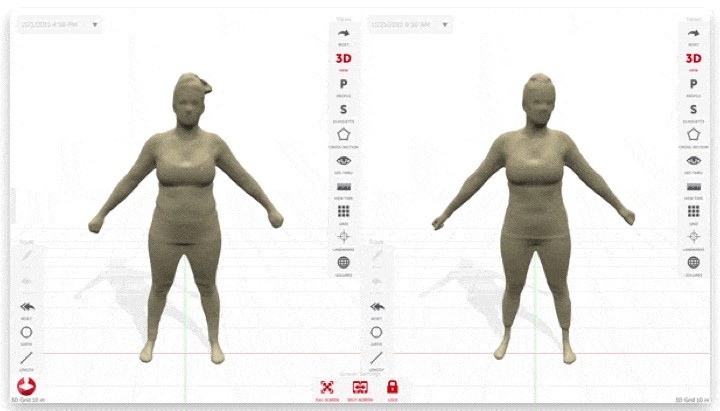
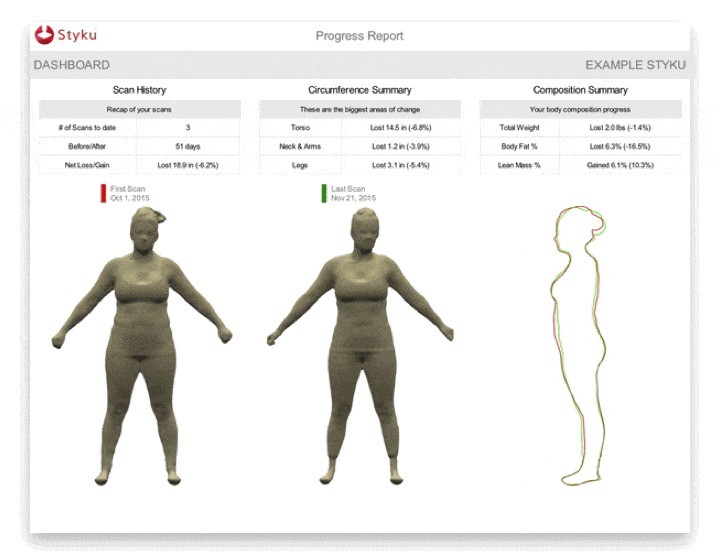
Objective 2D and 3D overlays make body-shape change visible even when scale weight barely moves.
Three practical shifts happen when visceral fat becomes a tracked metric in your practice:
1. You catch the people who look fine. The normal-BMI, centrally obese client is the highest-risk group in the Mayo data and the one your current screening almost certainly misses. Scanning finds them.
2. Plateaus stop killing programs. Weight stalls constantly. Waist shape, android fat and visceral estimates keep moving. Adherence survives when progress remains visible.
3. Motivation shifts from aesthetic to clinical. "Lose 10 kilos" is a wish. "Cut your waist by 6 cm and meaningfully reduce your cardiometabolic risk" is a health outcome — and health outcomes retain clients long after summer ends.
Visceral fat has been quietly recognised as one of the most important modifiable risk factors in medicine for two decades. What's changed is that measuring it no longer requires a CT suite. It requires 35 seconds and a turntable.
Interested in bringing Styku to your clinic, gym or corporate wellness program in Australia? [Contact details / CTA]
This article is general information and is not medical advice. Body scanning is a screening and progress-tracking tool, not a diagnostic device. Clients with elevated results should consult their GP or an accredited practising dietitian.
References
Fox CS, Massaro JM, Hoffmann U, et al. Abdominal visceral and subcutaneous adipose tissue compartments: association with metabolic risk factors in the Framingham Heart Study. Circulation. 2007;116(1):39–48. doi:10.1161/CIRCULATIONAHA.106.675355
Pou KM, Massaro JM, Hoffmann U, et al. Visceral and subcutaneous adipose tissue volumes are cross-sectionally related to markers of inflammation and oxidative stress: the Framingham Heart Study. Circulation. 2007;116:1234–1241. PMID: 17709633
Association Between Visceral and Subcutaneous Adipose Depots and Incident Cardiovascular Disease Risk Factors. Circulation. doi:10.1161/CIRCULATIONAHA.114.015000
Sahakyan KR, Somers VK, Rodriguez-Escudero JP, et al. Normal-weight central obesity: implications for total and cardiovascular mortality. Ann Intern Med. 2015;163(11):827–835. doi:10.7326/M14-2525
Effects of diet- and exercise-induced weight loss on visceral adipose tissue in men and women. PMID: 9257410
Merlotti C, et al. Subcutaneous fat loss is greater than visceral fat loss with diet and exercise, weight-loss promoting drugs and bariatric surgery: a critical review and meta-analysis. Int J Obes. 2017. doi:10.1038/ijo.2017.31
Comparable reduction of the visceral adipose tissue depot after a diet-induced weight loss with or without aerobic exercise in obese subjects: a 12-week randomized intervention study. Int J Obes. 2009.
Reductions in visceral fat during weight loss and walking are associated with improvements in VO2max. J Appl Physiol. 2001;90(1):99. doi:10.1152/jappl.2001.90.1.99
3-Dimensional optical scanning for body composition assessment: a 4-component model comparison of four commercially available scanners. Clinical Nutrition. 2020. doi:10.1016/j.clnu.2020.02.008
Bennett JP, et al. Assessment of clinical measures of total and regional body composition from a commercial 3D optical body scanner. Clinical Nutrition. 2022. doi:10.1016/j.clnu.2021.11.031
Bennett JP, et al. Three-dimensional optical body shape and features improve prediction of metabolic disease risk. Obesity. 2022. doi:10.1002/oby.23470
DeRouchey JD, et al. Reliability of the Styku 3D whole-body scanner for the assessment of body size in athletes. Measurement in Physical Education and Exercise Science. 2020. doi:10.1080/1091367X.2020.1791124
Heymsfield SB, et al. Digital anthropometry: a critical review. Eur J Clin Nutr. 2018. doi:10.1038/s41430-018-0145-7
Accuracy and precision of 3-dimensional optical imaging for body composition by age, BMI, and ethnicity. Am J Clin Nutr. 2023.
Association between visceral fat and brain structural changes or cognitive function. PMC8391376
Australian Institute of Health and Welfare. Overweight and obesity (summary), AIHW analysis of ABS 2022–24 National Health Measures Survey.
Styku. How do I explain and understand the contents of the Scan Report? Styku Help Centre.